
Εφορεία Αρχαιοτήτων Πόλης Θεσσαλονίκης,
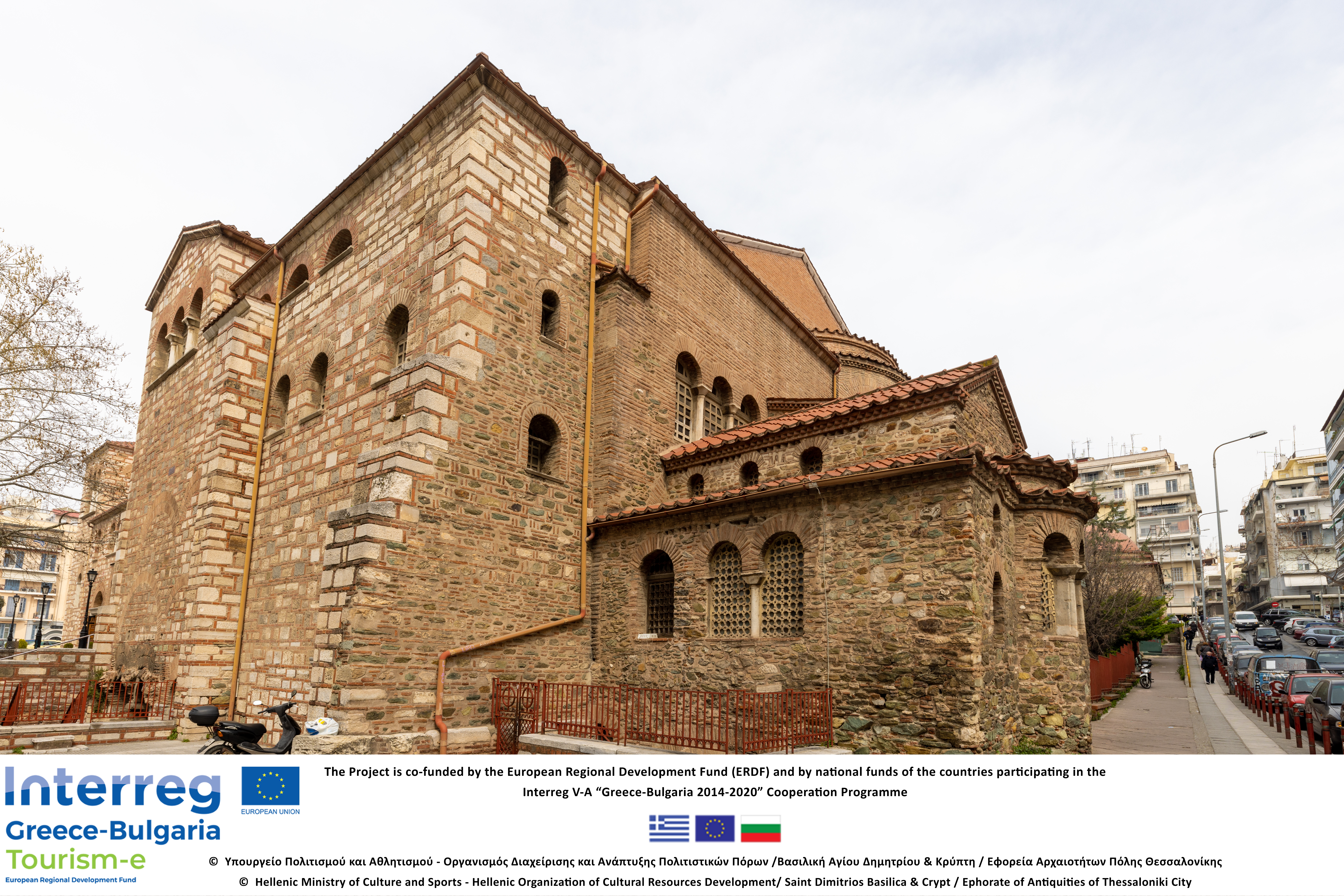
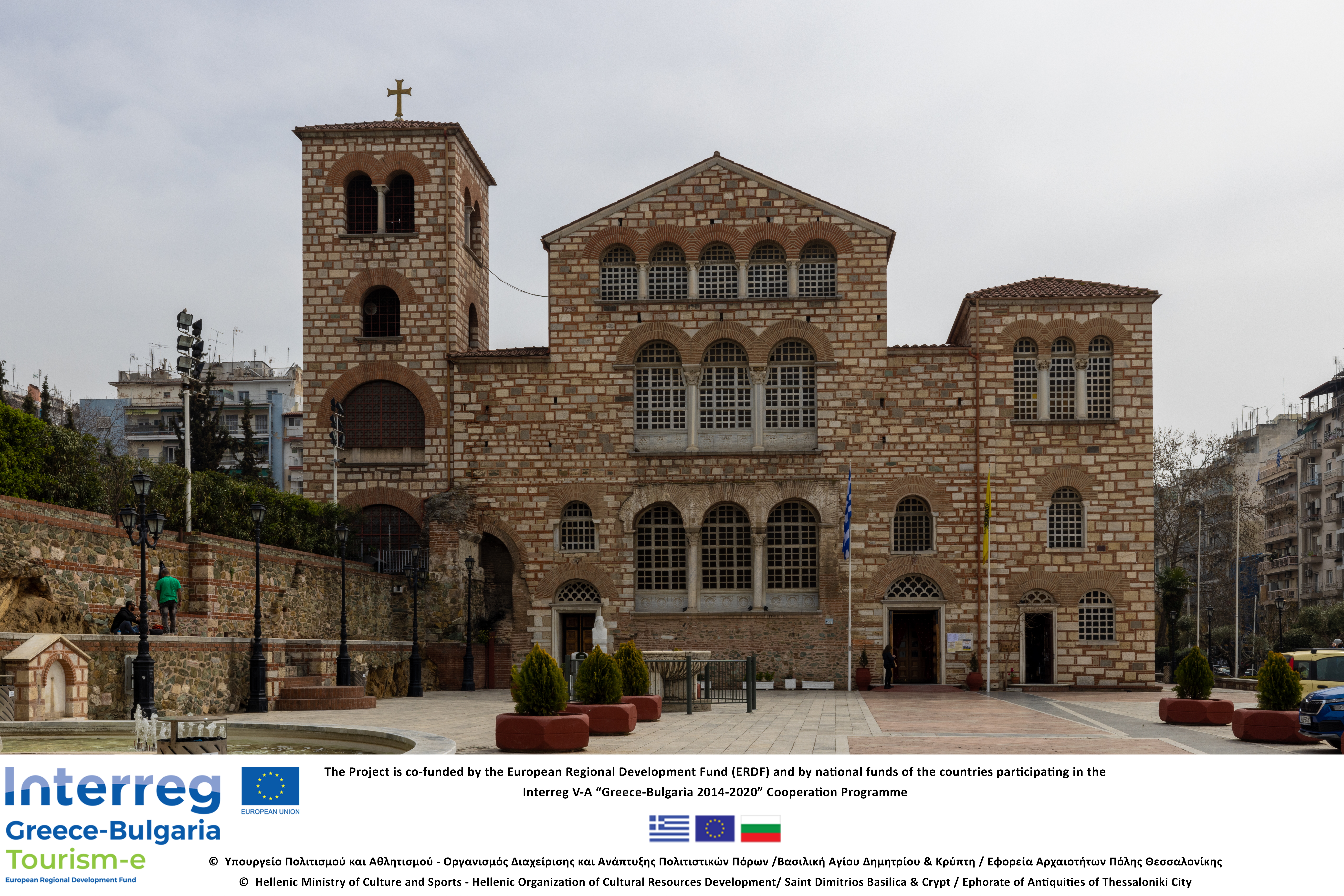
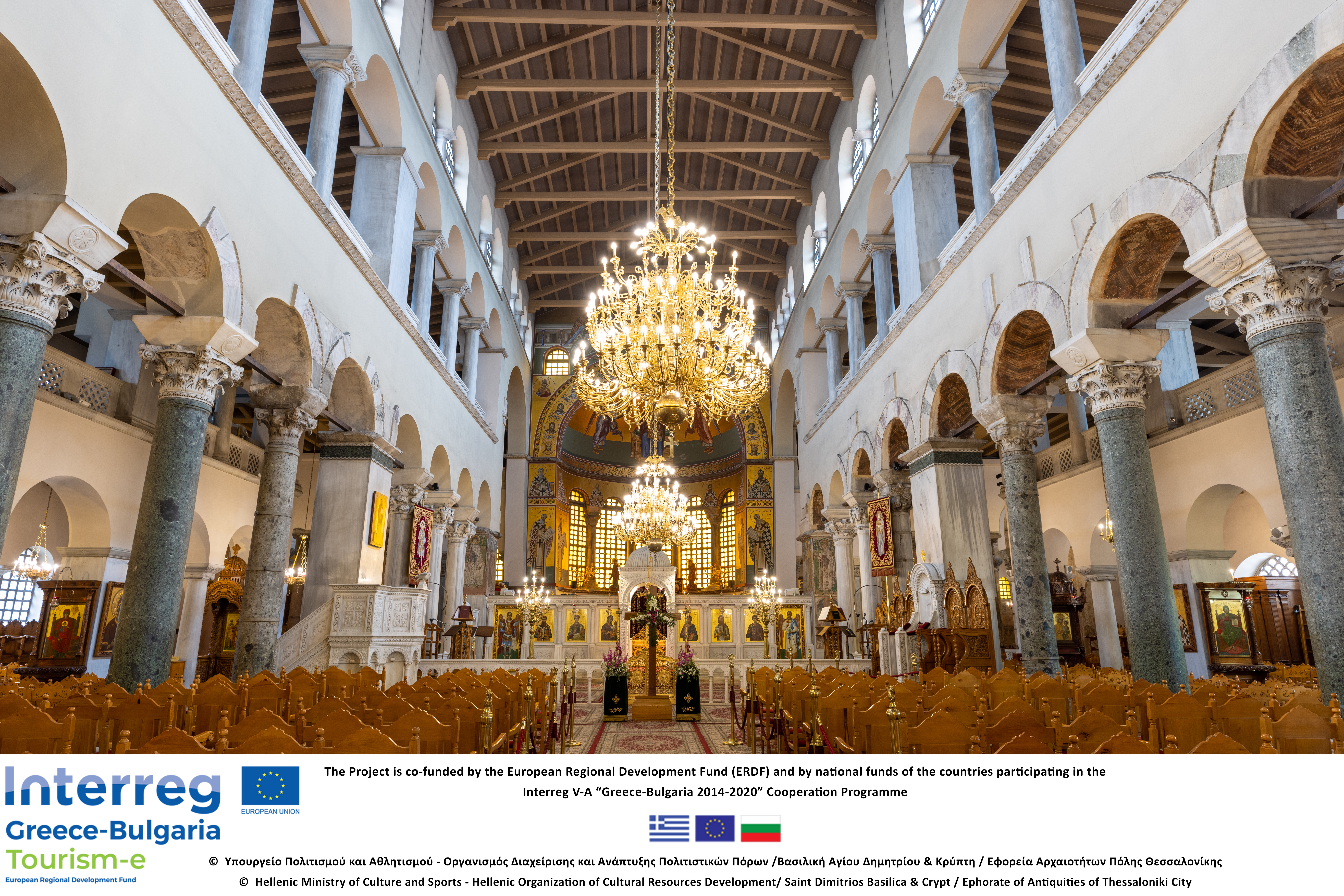
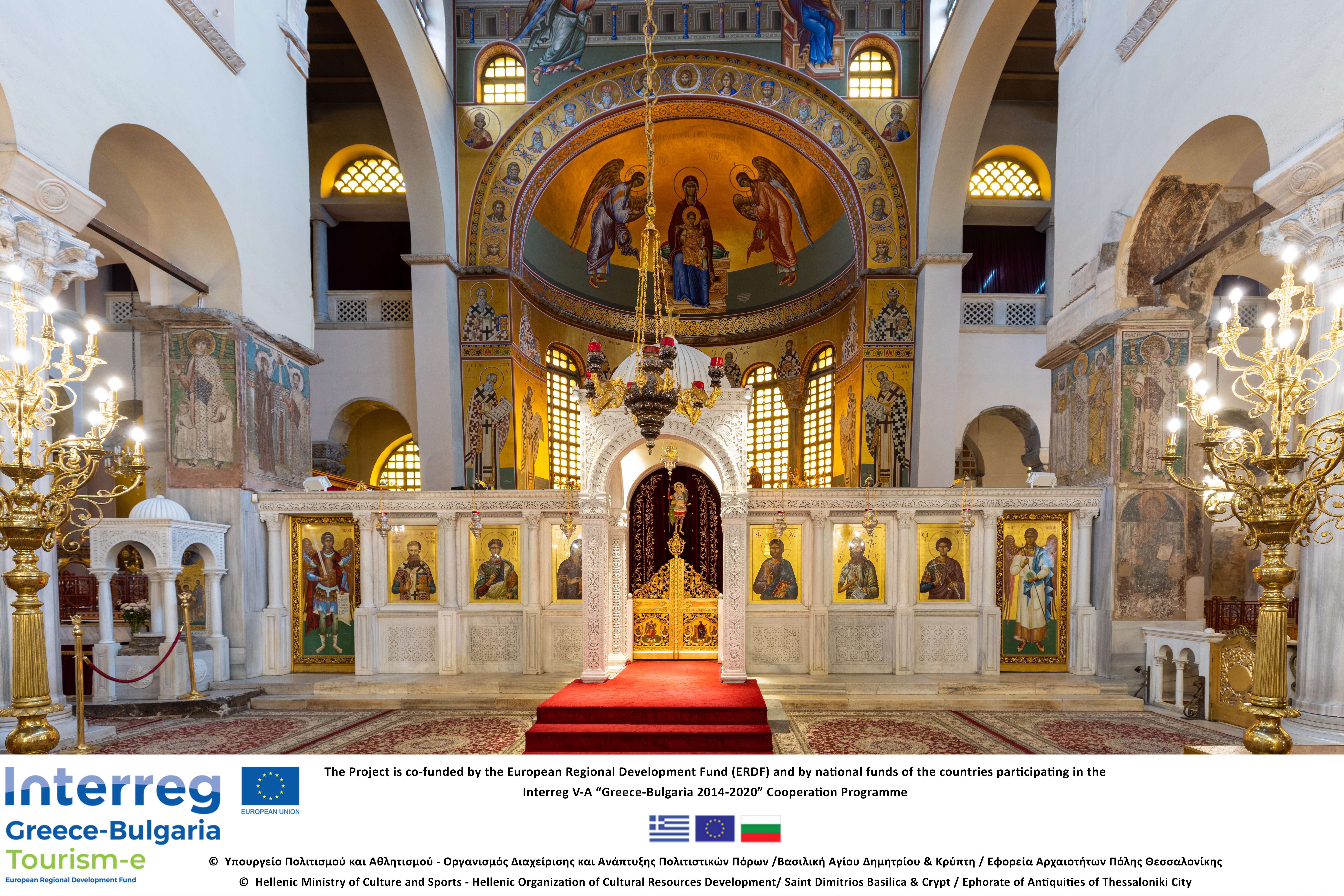
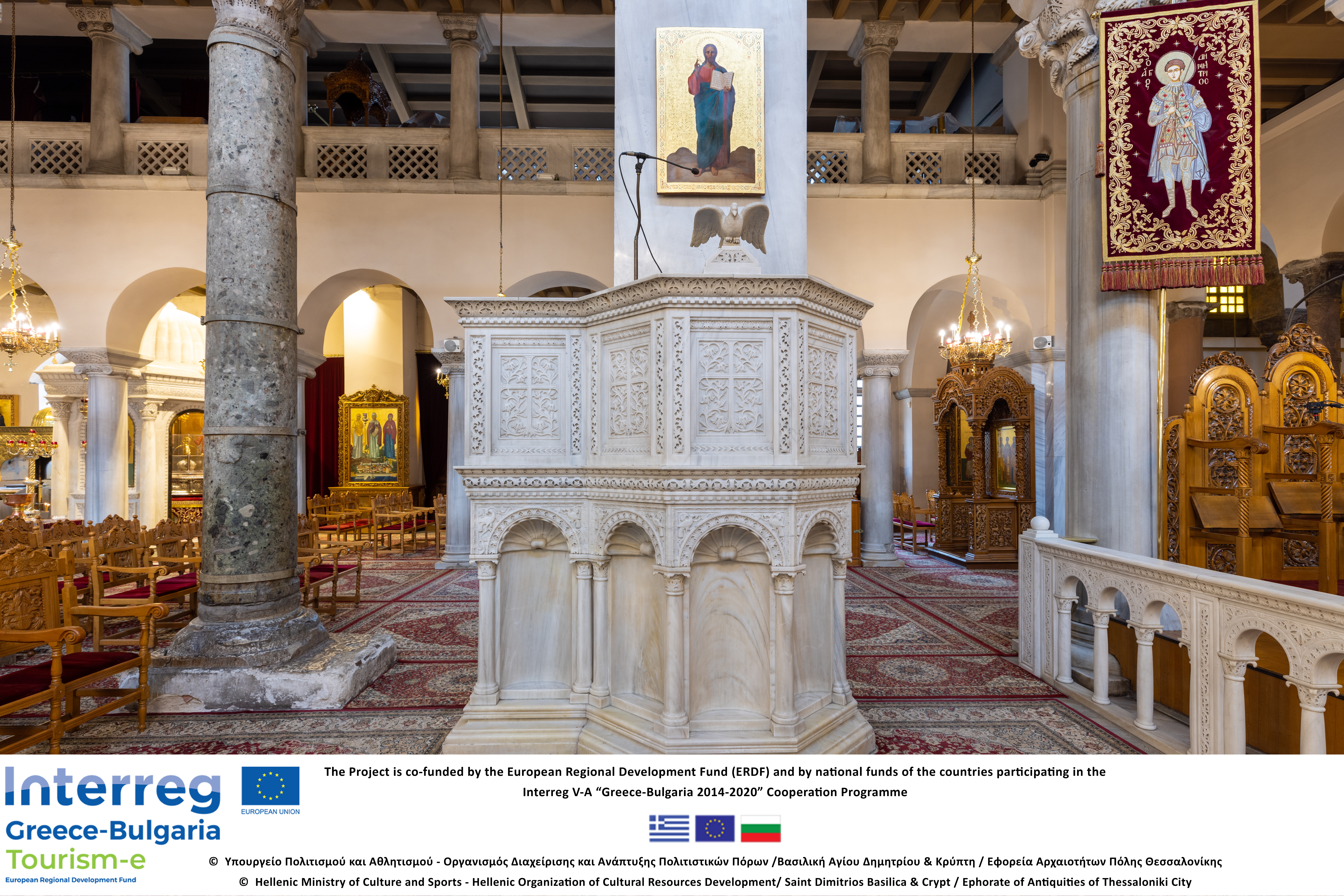
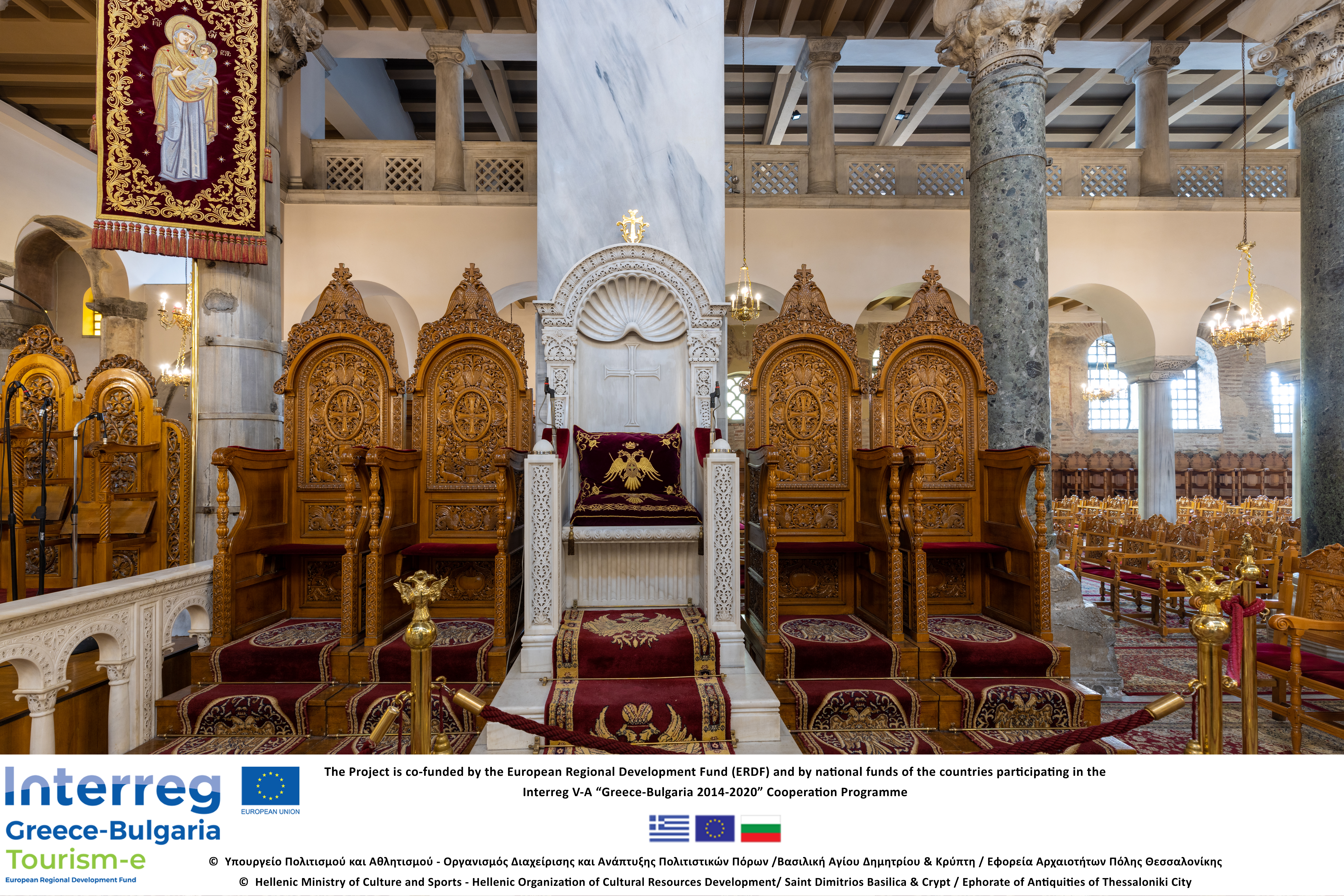
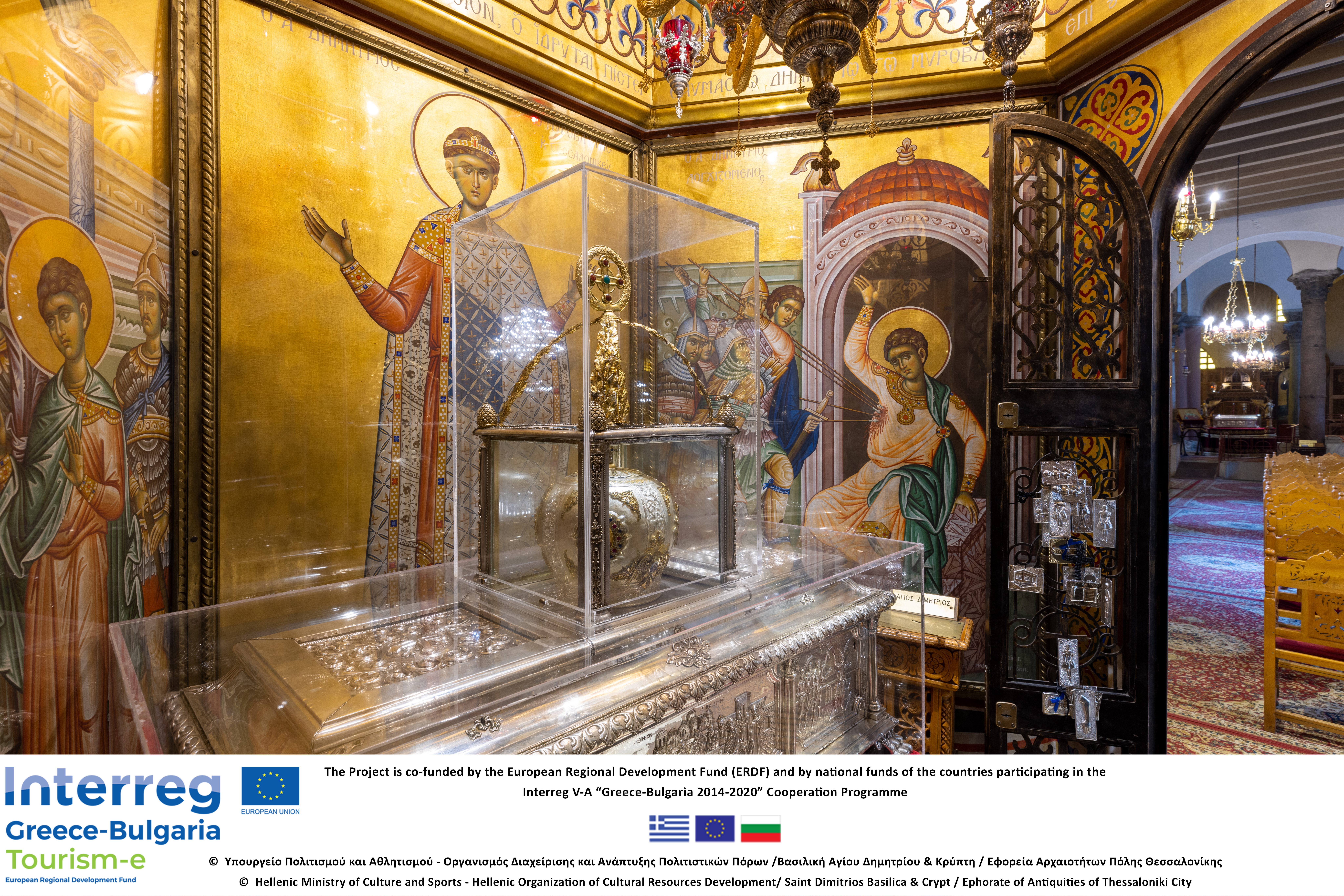
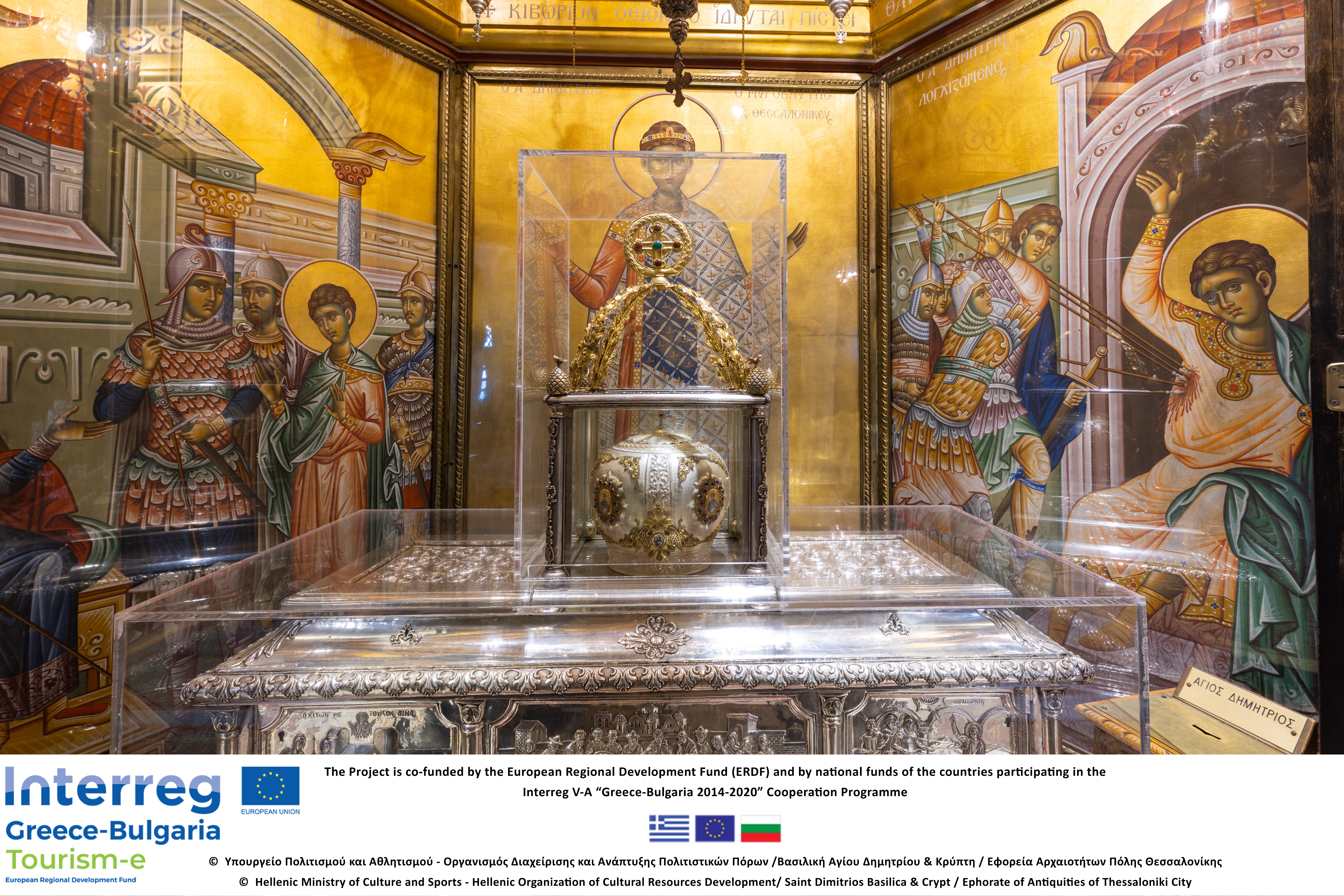
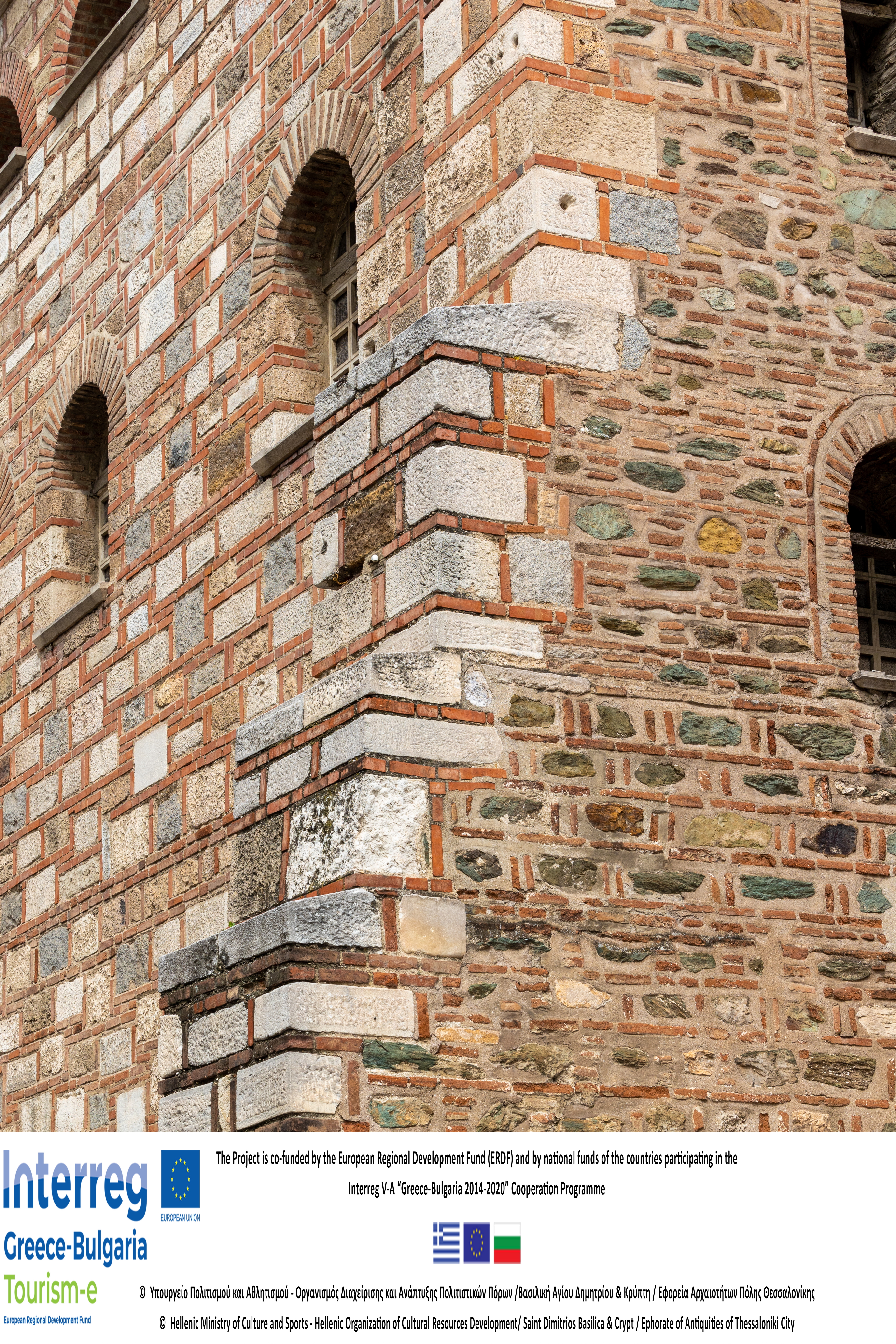
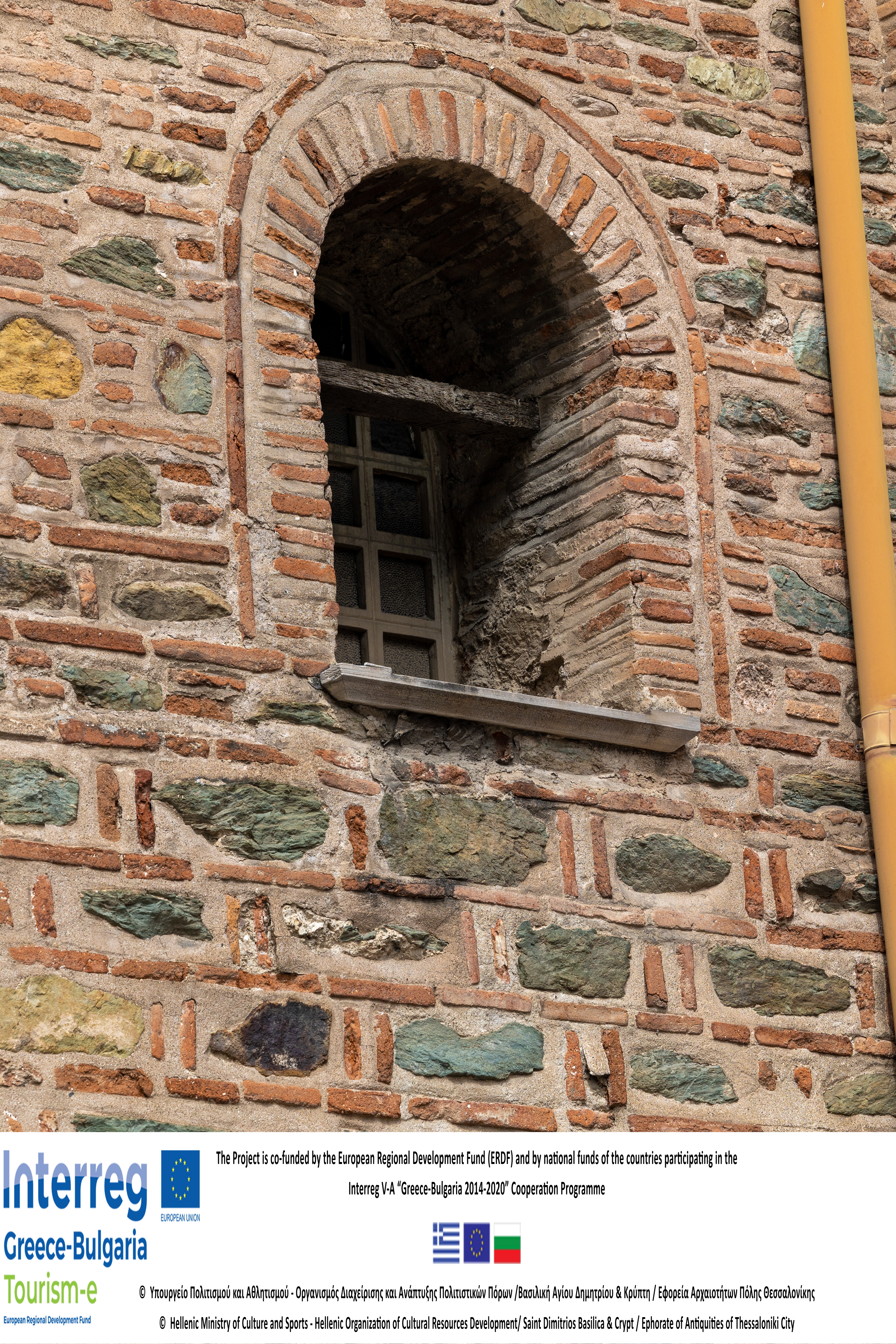
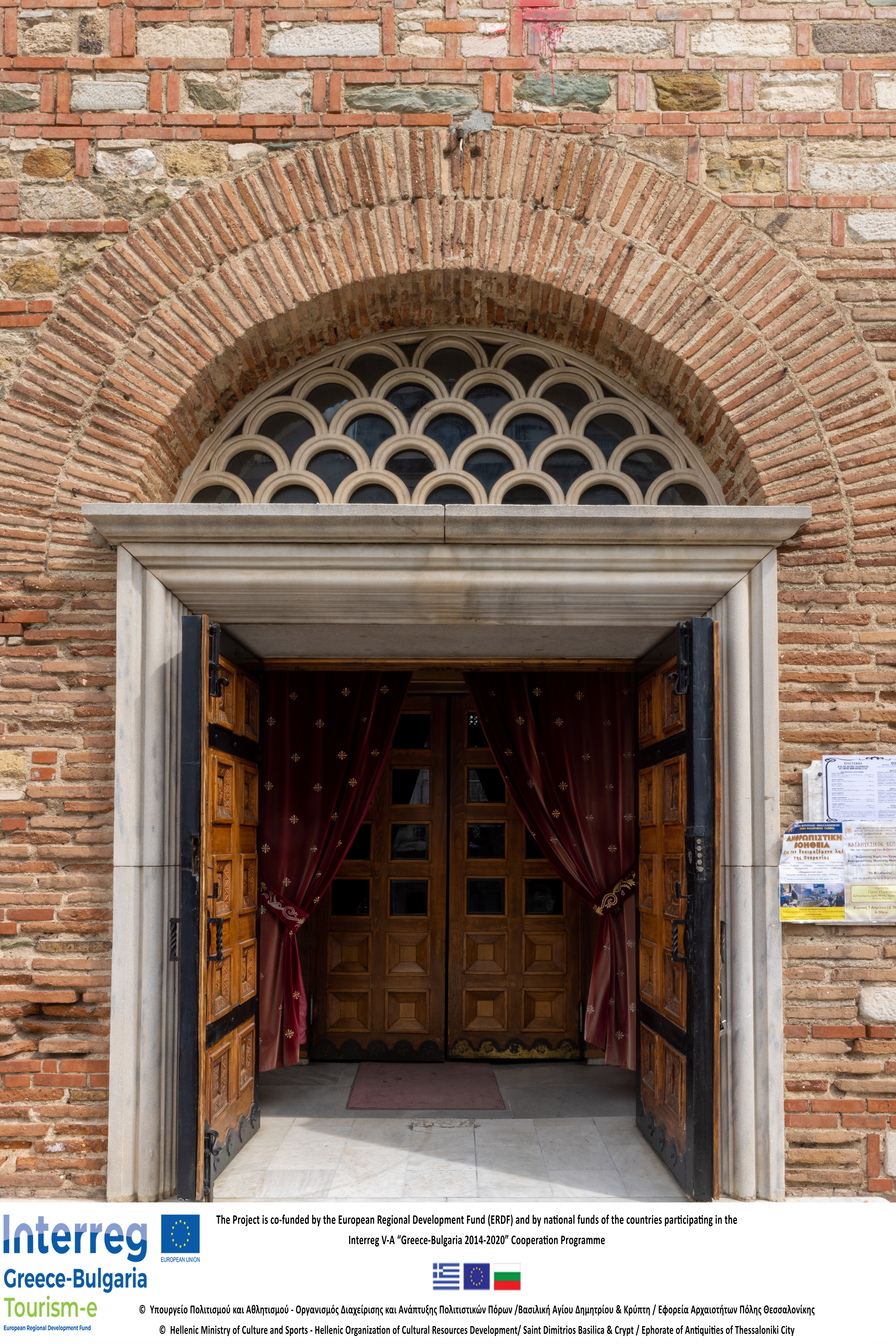
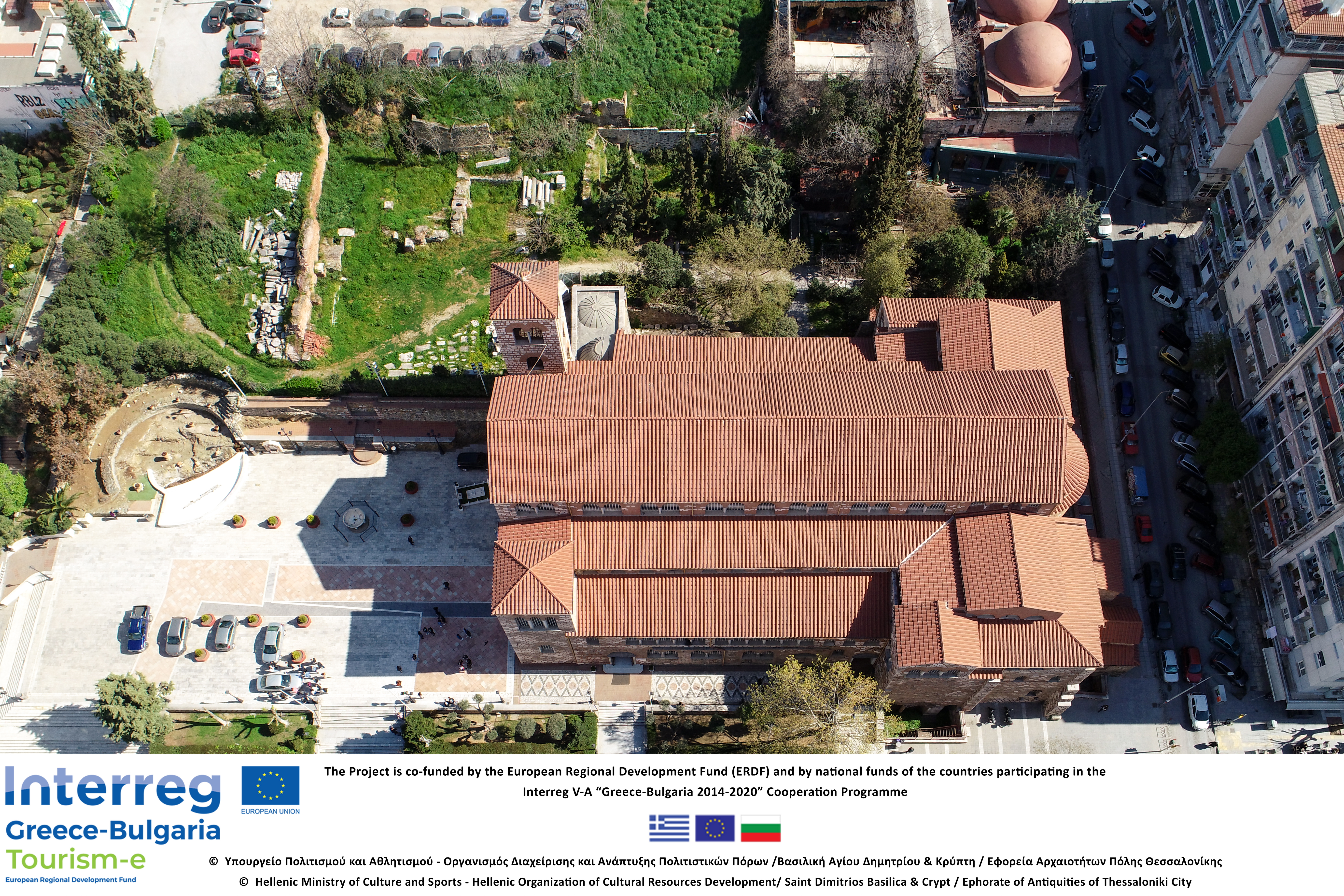
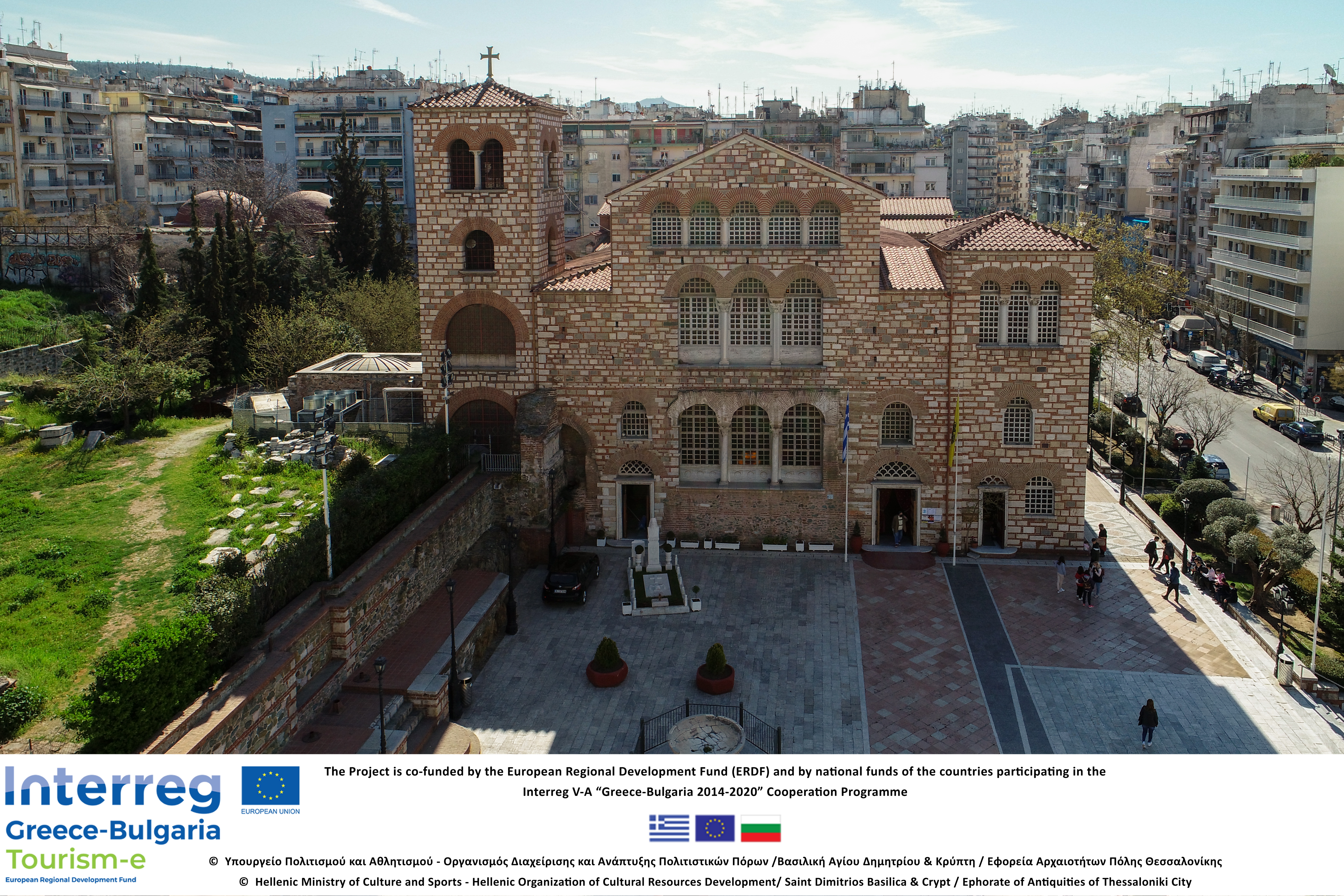
Η βασιλική του Αγίου Δημητρίου, αφιερωμένη στον πολιούχο της πόλης, δέσποζε άλλοτε σε όλη τη Βυζαντινή πόλη, βορείως της αρχαίας Αγοράς και του βυζαντινού Μεγαλοφόρου. Το πρώτο λατρευτικό κτίσμα προς τιμή του αγίου ιδρύθηκε στις αρχές του 4ου αι. στη θέση όπου φυλακίστηκε, μαρτύρησε και ετάφη το 304 ο αυλικός αξιωματούχος Δημήτριος. Στις αρχές του 5ου αι. ο έπαρχος του Ιλλυρικού Λεόντιος ανήγειρε στην ίδια θέση πεντάκλιτη ξυλόστεγη με εγκάρσιο κλίτος και υπερώα βασιλική, η οποία καταστράφηκε από πυρκαγιά περί το 620 και ανοικοδομήθηκε αμέσως μετά. Τον 10ο αι. προστέθηκε στη ΝΔ γωνία της βασιλικής ναΰδριο, αφιερωμένο στον Άγιο Ευθύμιο, και το οποίο κοσμούν εξέχουσες τοιχογραφίες της καλλιτεχνικής «Αναγέννησης» της περιόδου των Παλαιολόγων (1261-1453). Το 1493 ο ναός μετατράπηκε σε μουσουλμανικό τέμενος με την επωνυμία Κασιμιέ, ενώ η λατρεία του Αγίου συνεχίστηκε απρόσκοπτα στο διαμέρισμα ΒΔ της βασιλικής. Η σημερινή αναδομημένη μορφή του ναού – ο οποίος καταστράφηκε σχεδόν ολοσχερώς στην πυρκαγιά του 1917 - είναι αποτέλεσμα εκτεταμένων εργασιών αναστήλωσης που άρχισαν το 1918 και ολοκληρώθηκαν το 1948.
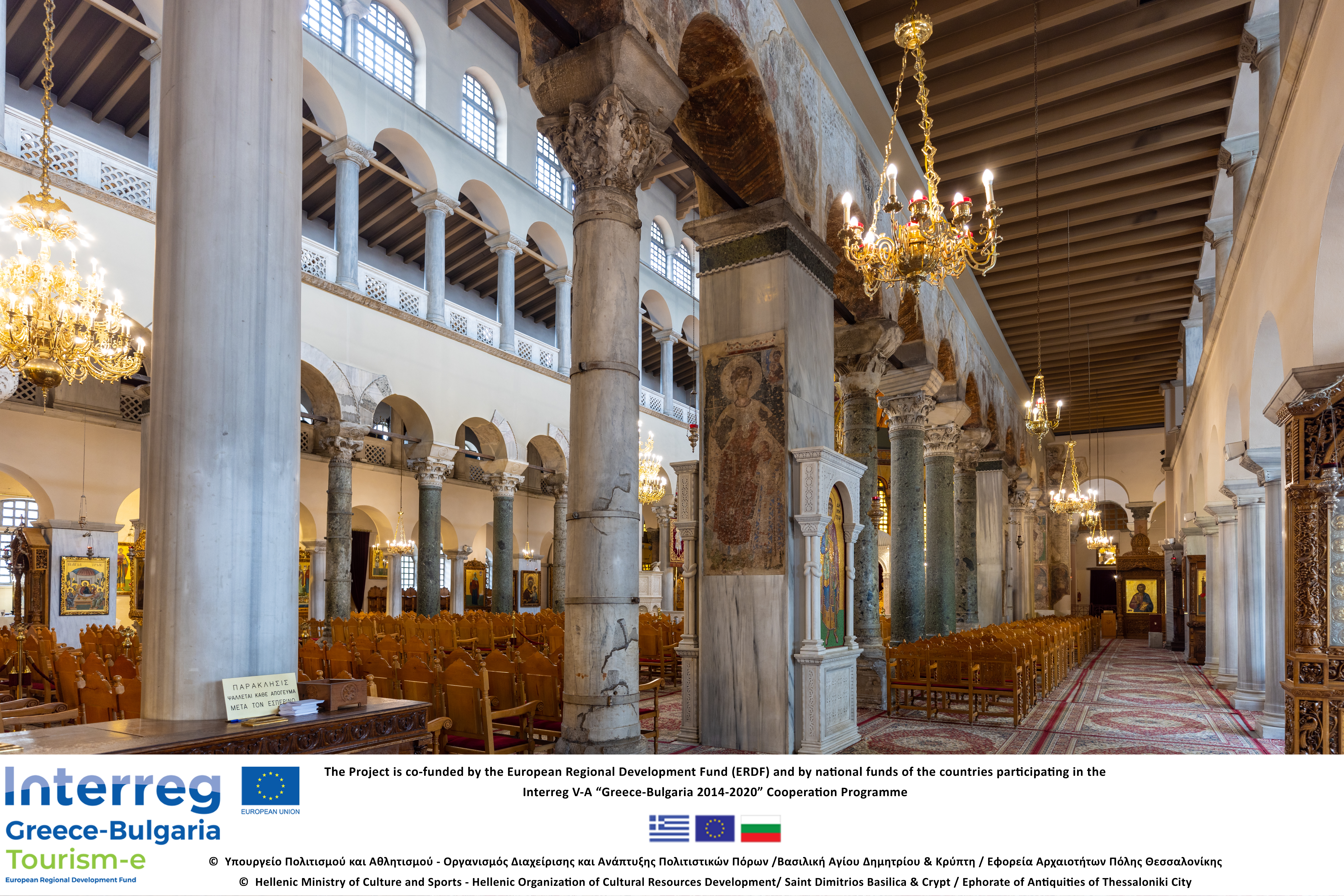
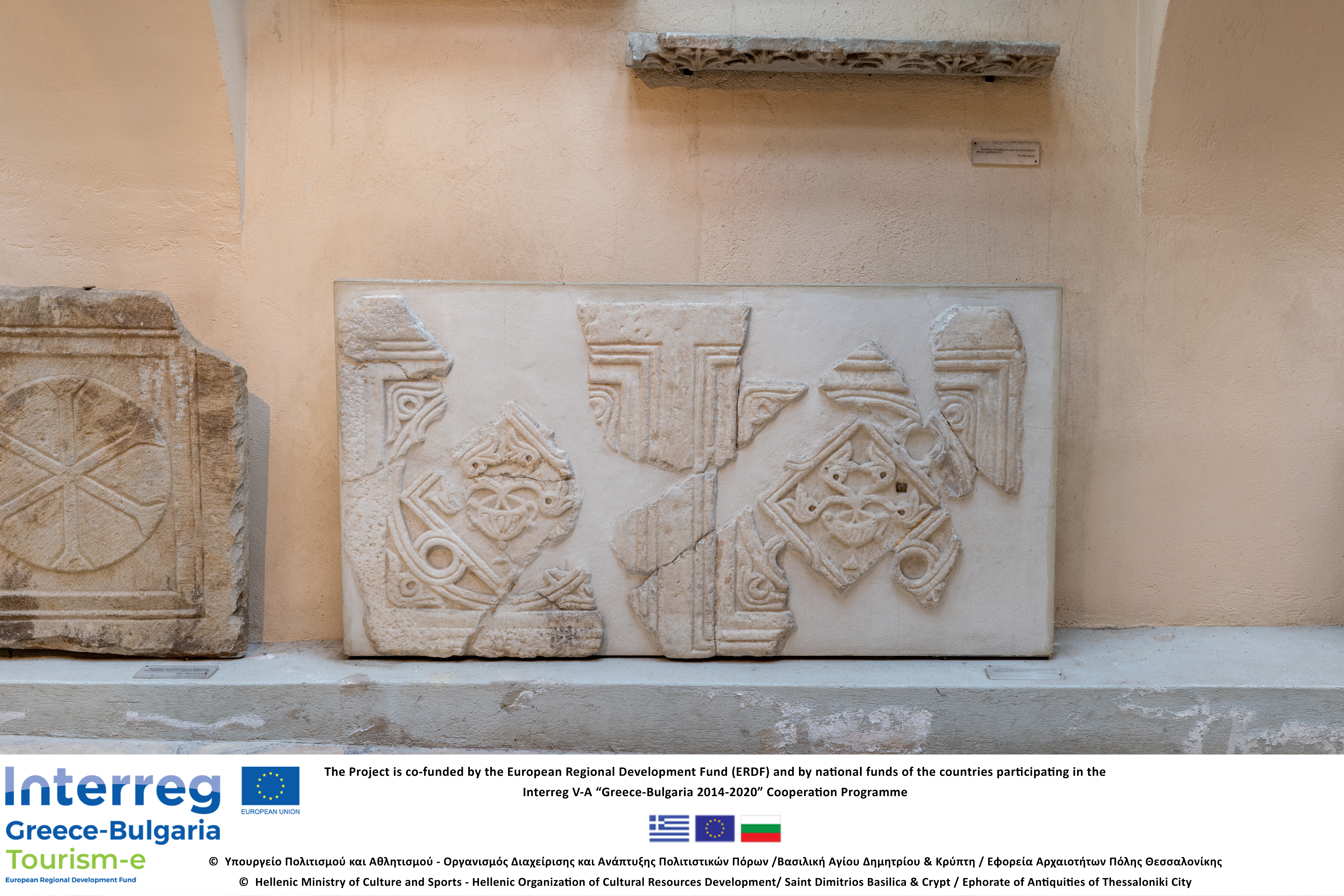
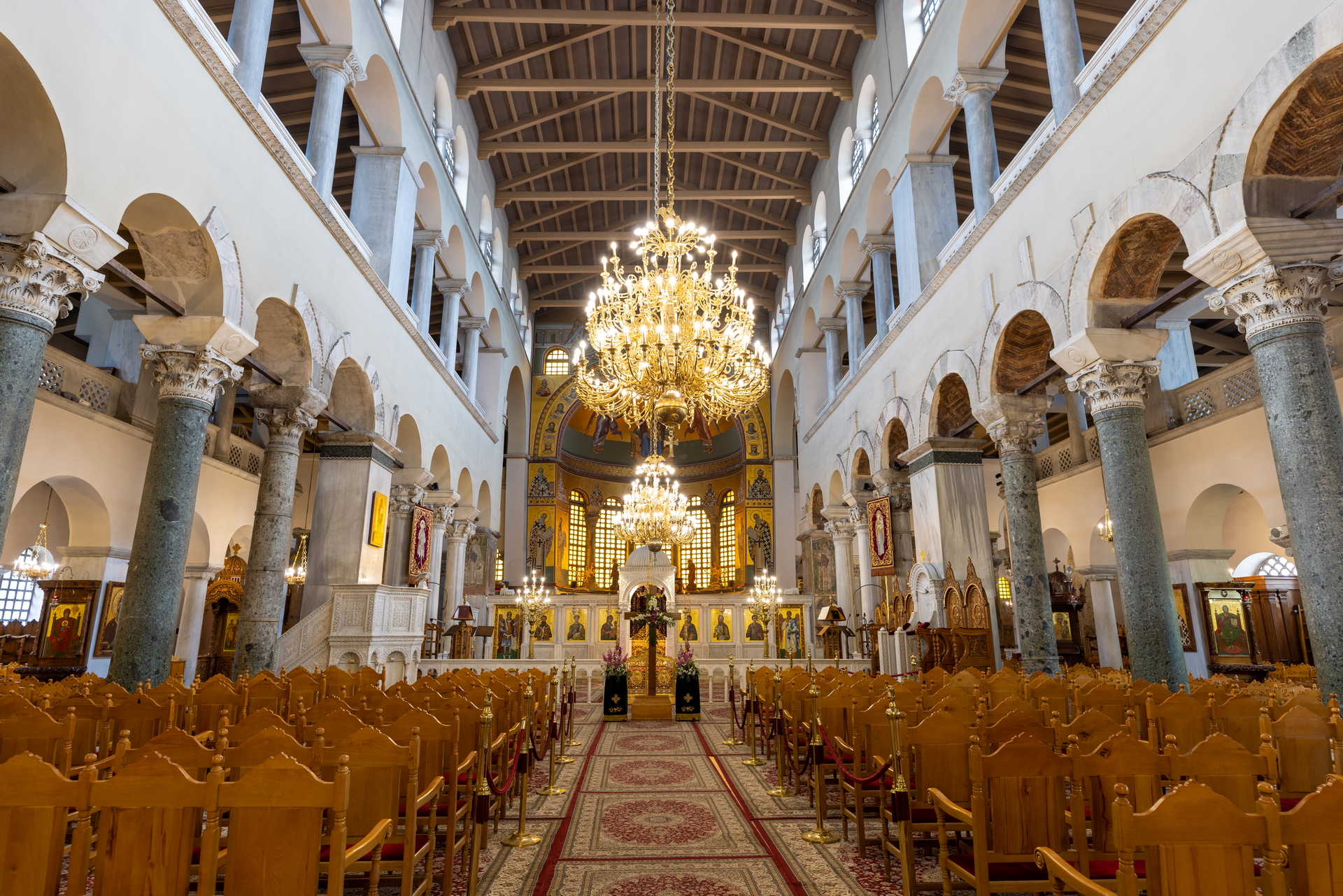
Από την πυρκαγιά του 1917 διασώθηκε μέρος του άλλοτε πλούσιου γλυπτού διακόσμου και των μαρμάρινων αρχιτεκτονικών μελών των κιονοστοιχιών του ισογείου και των υπερώων. Από τον επίσης εξαίρετο ψηφιδωτό διάκοσμο, διασώθηκαν ένδεκα ψηφιδωτές συνθέσεις αναθηματικού χαρακτήρα του 5ου, 7ου και 9ου αι. που διατηρούνται στους δύο πεσσούς του ιερού βήματος και στο δυτικό τοίχο του κεντρικού κλίτους.
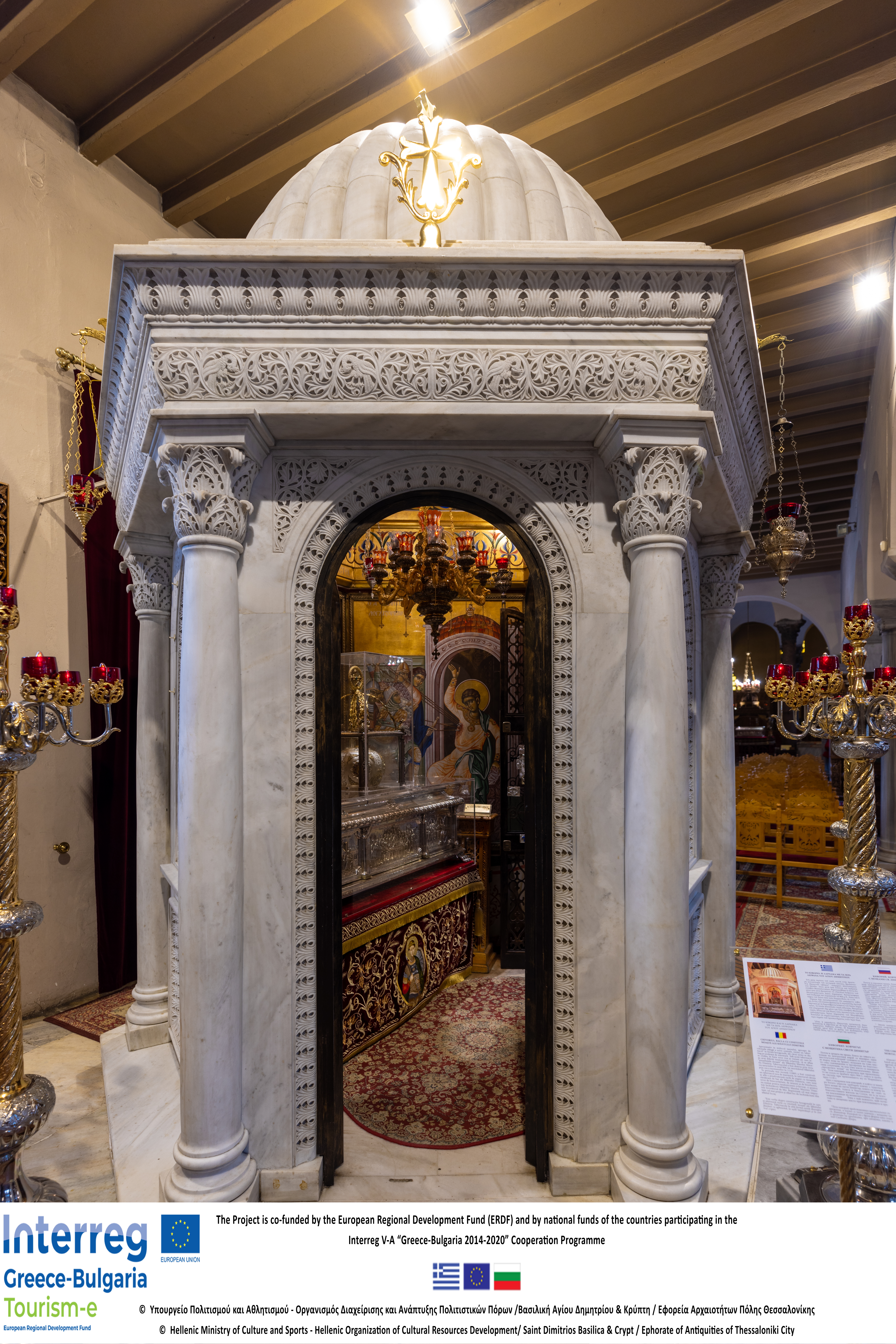
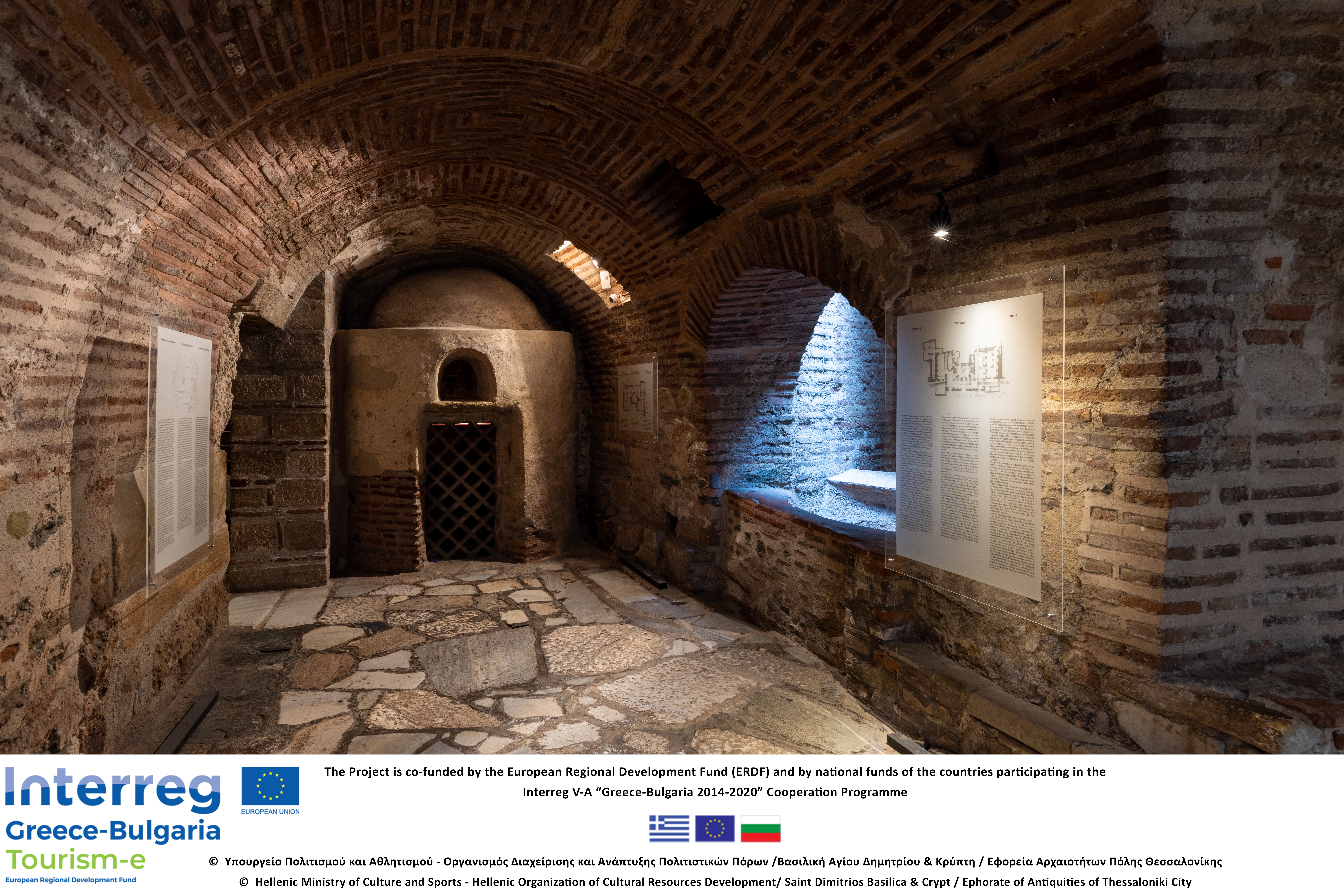
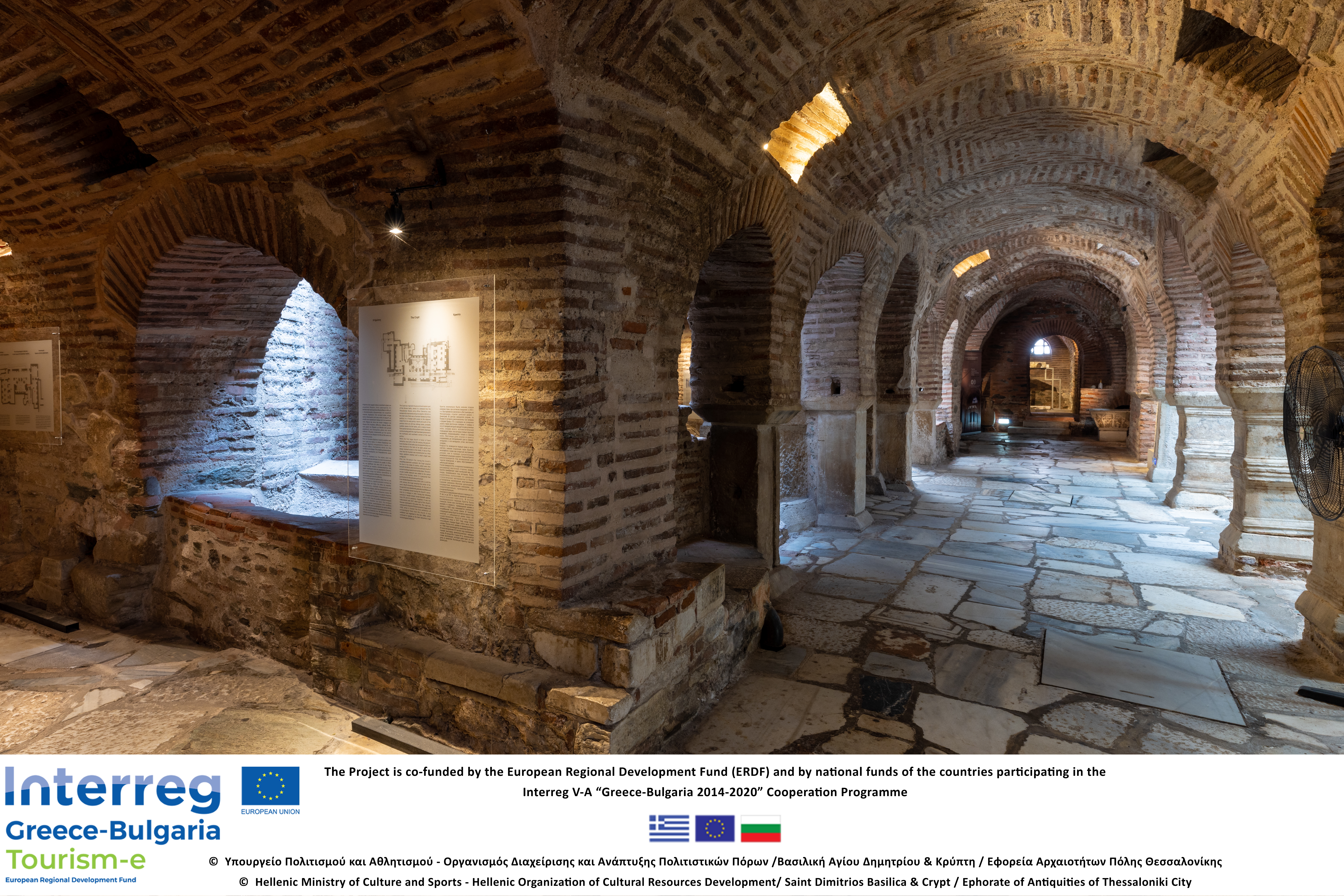
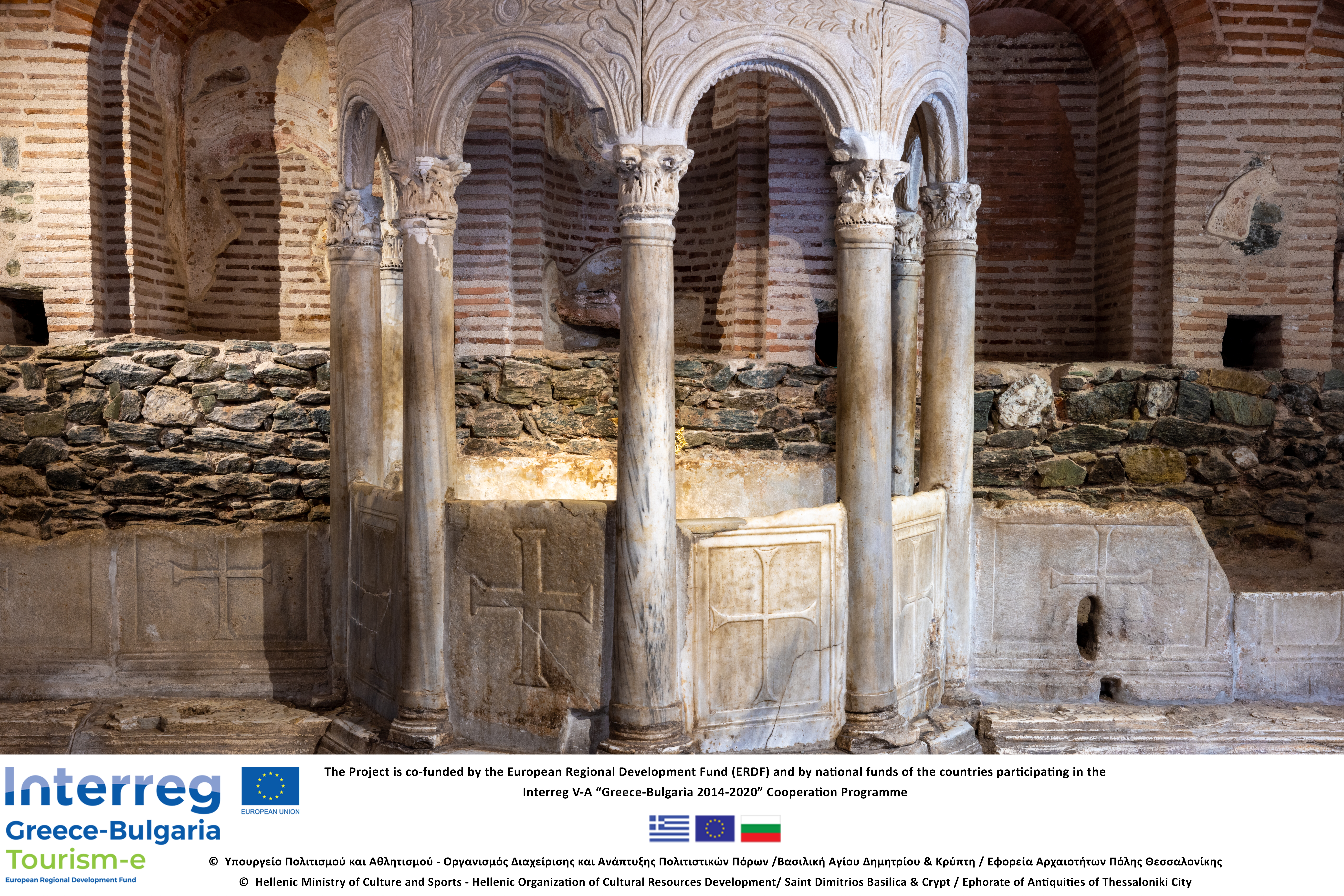
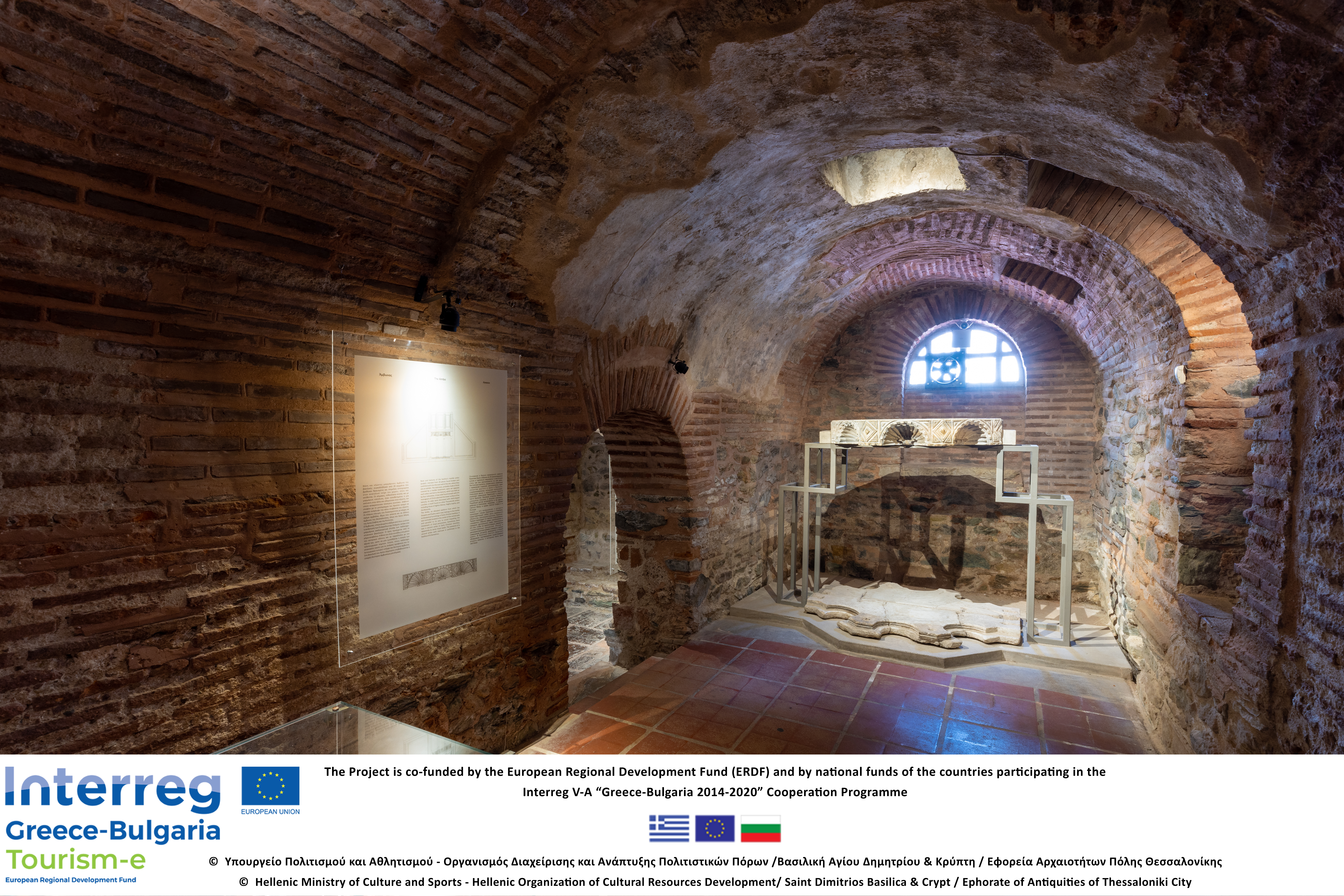
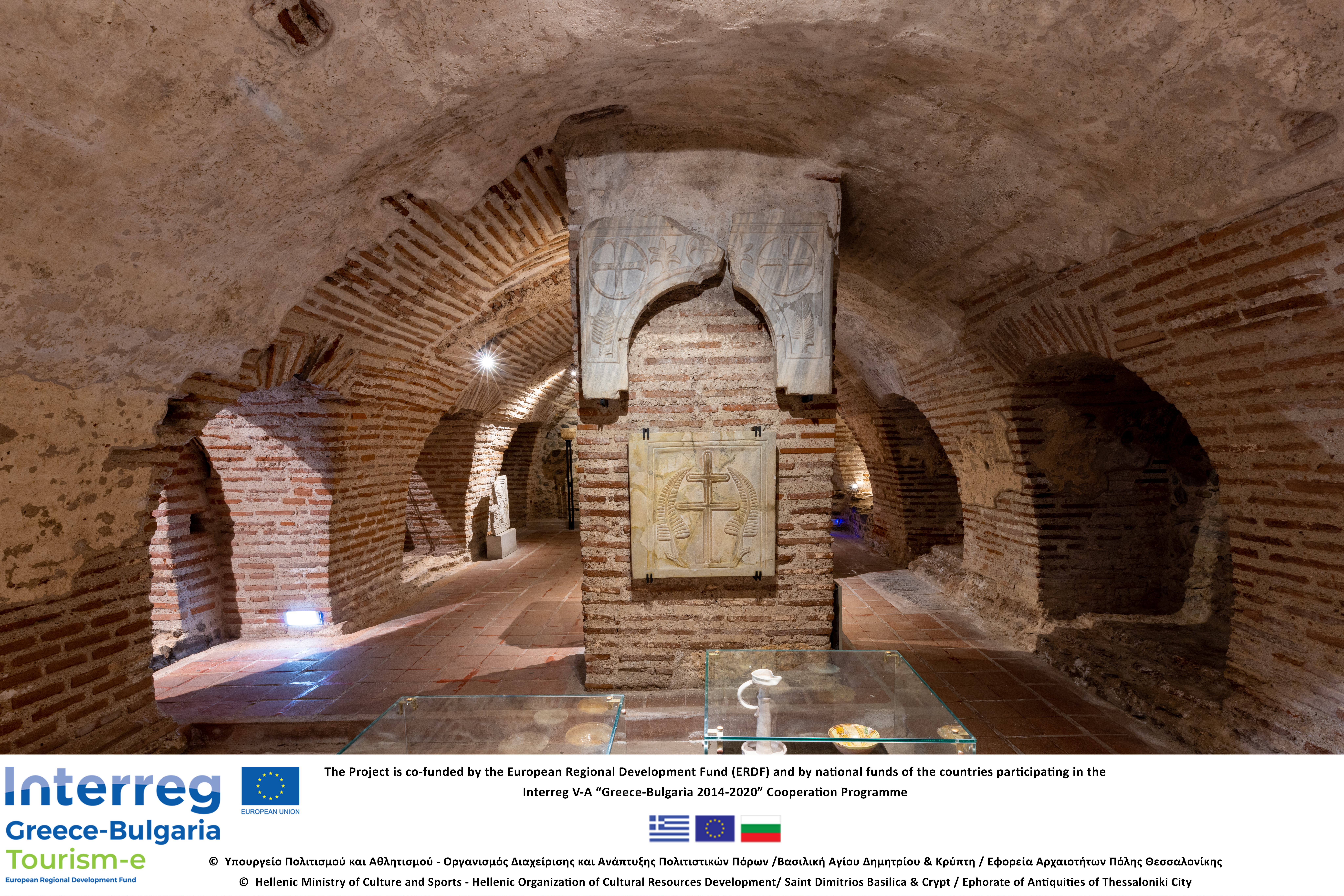
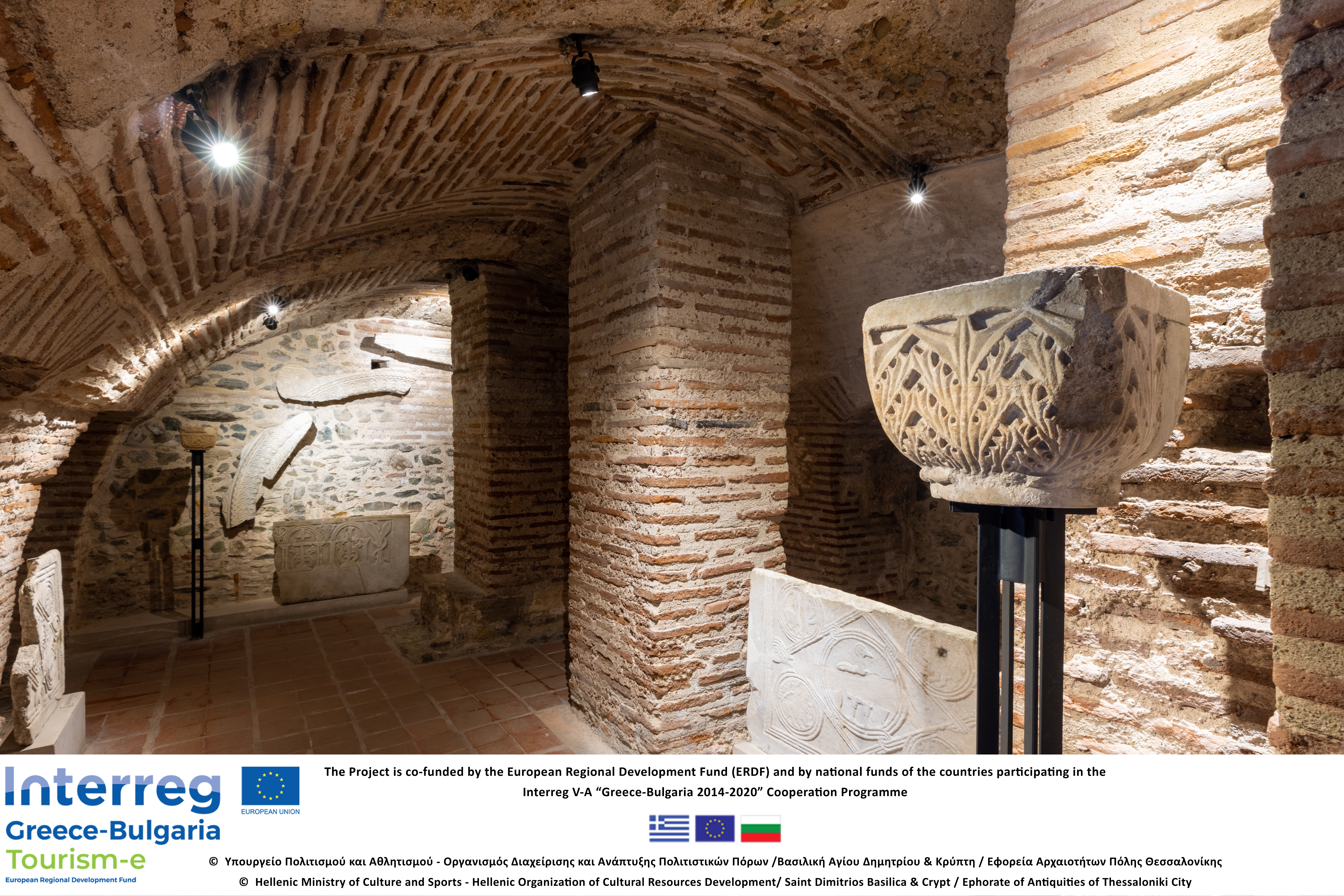
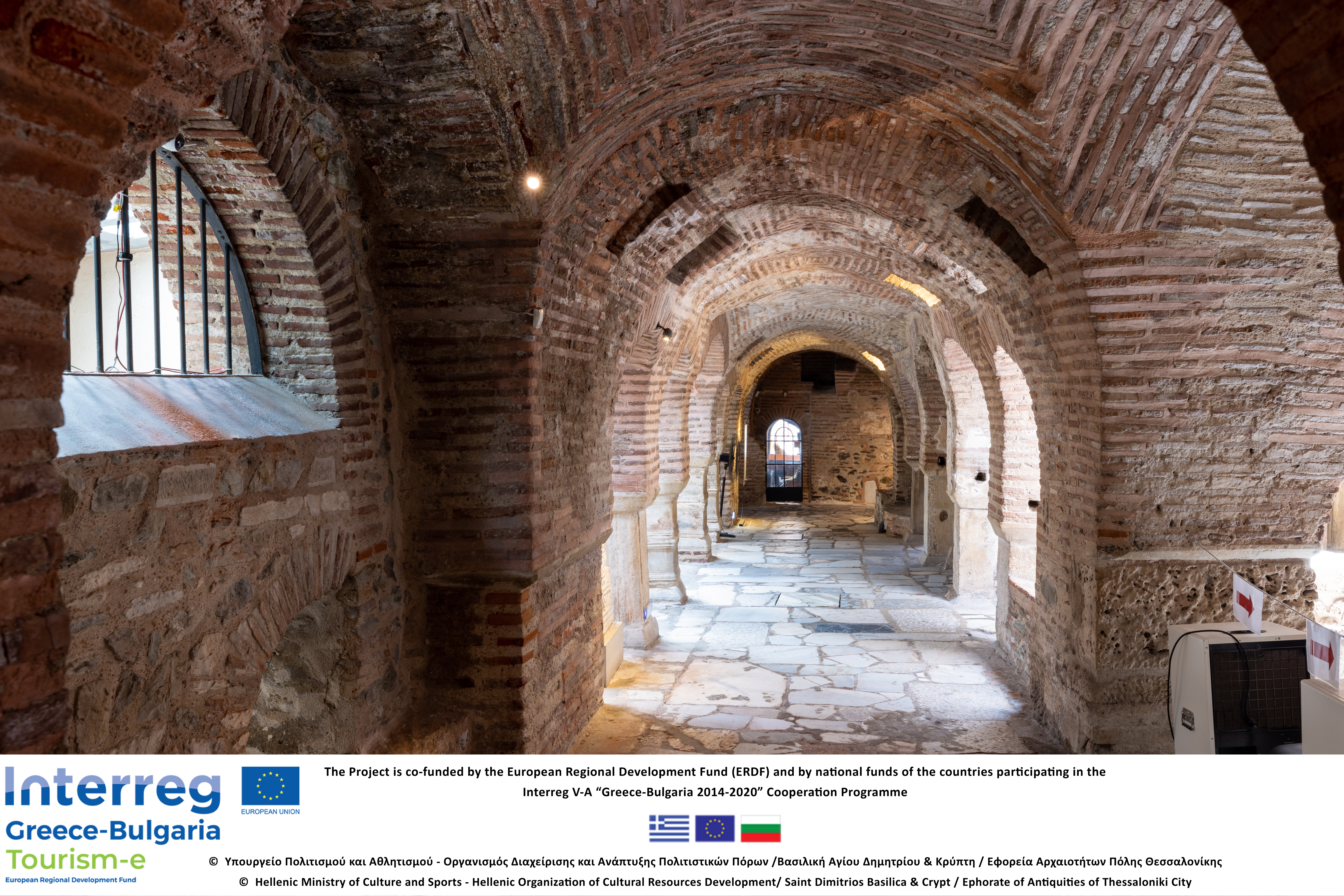
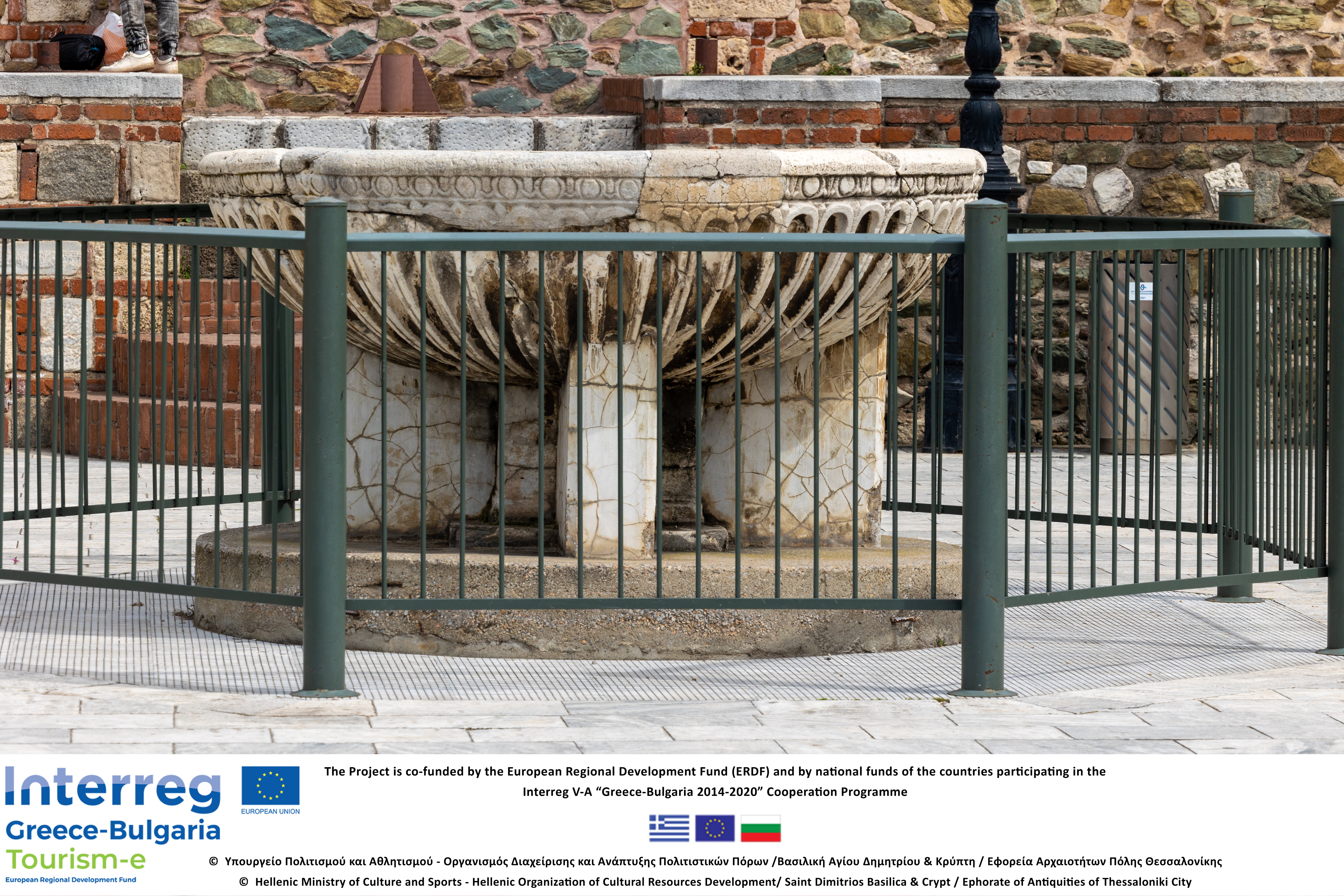
Η Κρύπτη, που βρίσκεται κάτω από τον χώρο του ιερού της βασιλικής, ήταν αρχικά το ισόγειο ανατολικό τμήμα των ρωμαϊκών θερμών, όπου, σύμφωνα με την παράδοση, φυλακίσθηκε, μαρτύρησε και τάφηκε ο Άγιος Δημήτριος. Η πρώτη βασιλική του 5ου αιώνα που ανεγέρθηκε προς τιμήν του Αγίου ενσωμάτωσε το ισόγειο αυτό διαμέρισμα. Αρχικά στην Κρύπτη οι πιστοί τιμούσαν τον Άγιο μέσῳ του αγιάσματος, που ελάμβαναν από την κεντρική κρήνη, την οποία τροφοδοτούσε πηγάδι, που σώζεται μέχρι και σήμερα. Από τον 10ο και μέχρι τον 14ο αι., η Κρύπτη αποτελεί το κέντρο της Μυροβλησίας του Αγίου. Οι πιστοί συνέλεγαν το Μύρο σε μικρά δοχεία, πήλινα, γυάλινα ή μεταλλικά, κυρίως μολύβδινα, τα λεγόμενα κουτρούβια και τα οποία έπαιρναν μαζί τους οι προσκυνητές. Η εξάπλωση που είχαν τα αντικείμενα αυτά στον χριστιανικό κόσμο υπήρξε μεγάλη, γεγονός που φανερώνει τη διάδοση της τιμής του Αγίου και την ανάδειξη της Θεσσαλονίκης σε σημαντικό προσκυνηματικό κέντρο του βυζαντινού κόσμου.,
The basilica of Saint Dimitrios, dedicated to the city's patron saint, used to overlook the entire Byzantine city, north of the ancient Agora and the Byzantine Megaloforos. The first religious building in the Saint's honor was founded at the beginning of the 4th c. at the exact place where the court official Dimitrios was imprisoned, martyred, and buried in 304. In the early 5th century, the Illyricum prefect Leontius erected in the same place a five-aisled, wooden roofed with a transverse aisle and galleries basilica destroyed by fire around 620 and rebuilt immediately afterward. In the 10th century, a chapel dedicated to Saint Efthymios was added to the southwest corner of the basilica, adorned with excellent frescoes of the artistic "Renaissance" of the Palaeologan period (1261-1453). In 1493, it was converted into a mosque known as "Kasimie," while the worship of the Saint continued unhindered in the basilica's northwest compartment. The current reconstructed form of the church - which was almost completely destroyed in the fire of 1917 - is the result of extensive restoration work that began in 1918 and was completed in 1948.
Some original features were saved from the fire of 1917, such as part of the once rich sculptural decoration and the marble architectural members of the colonnades on the ground floor and the galleries. Out of the excellent mosaic decoration, only eleven mosaic compositions of the votive character of the 5th, 7th, and 9th c. are preserved on the two pillars of the altar and the west wall of the central aisle.
The Crypt, located below the basilica's altar, was originally the ground floor east of the Roman baths, where, according to tradition, Saint Dimitrios was imprisoned, martyred, and buried. The first basilica of the 5th century built in honor of the Saint incorporated this ground floor compartment. Initially, in the Crypt, the faithful honored the Saint through the holy water they received from the central fountain, which flowed from a well that survives to this day. From the 10th to the 14th century, the Crypt is the center of the Myrovlisia (miraculous oil exudation). The faithful collected the Chrism (Holy Oil) in small containers made of clay, glass, or metal, mainly lead, the so-called "koutrouvia", which the pilgrims took with them. The spread of these objects in the Christian world was great, revealing the rise of the Saint's praise and the development of Thessaloniki as an important pilgrimage center of the Byzantine world.
| Χαρακτηριστικό | Τιμή |
|---|---|
| Θέμα | Εκκλησίες/Μονές - Τεμένη |
| Δημιουργός | |
| Ενότητα | Εκκλησίες/Μονές - Τεμένη |
| Αποτελεί μέρος: | |
| Τύπος | Θρησκεία |
| Format | |
| Αρ.Σελίδων | |
| Ημερομηνία | |
| Τοποθεσία | |
| Γλώσσα | ψηφιδωτά |
| URL | https://tourisme.repository.gr/jsonitems/3850 |
| Κάτοχος Δικαιωμάτων | |
| Άδεια χρήσης ψηφιακών αρχείων | |
| Κατηγορία | Όλα τα αντικείμενα |
| Ηχητικά |